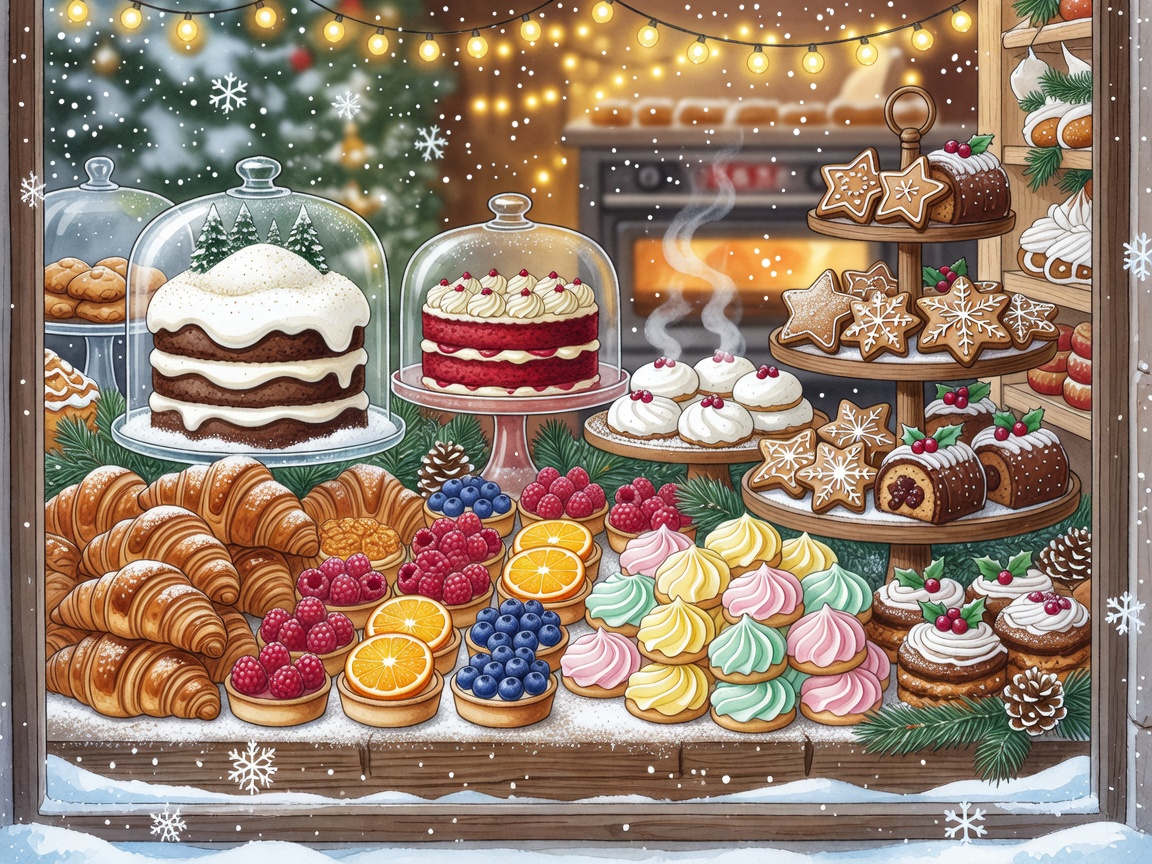
Seasonal baking, many local versions
Food stalls offer an immediate way to meet a place through scent, texture, and a few warm minutes outdoors. Across European winter traditions, visitors may find spice-scented biscuits, fruit-rich breads, roasted nuts, filled pastries, and simple savoury dishes. A recipe can travel across borders and still acquire local versions, so a familiar name does not mean every stall makes the same thing.
Lebkuchen is associated with German-speaking Christmas traditions and appears in a range of forms, from soft iced pieces to firmer decorated biscuits. Dresden is strongly associated with Stollen, a rich fruit bread familiar in German Christmas baking. Vanillekipferl are crescent-shaped vanilla biscuits found in Austrian and wider Central European seasonal baking. Latvian piparkūkas are spiced gingerbread biscuits connected with winter festivities. Danish æbleskiver are small, round pan-cooked treats associated with seasonal food customs. These examples are introductions, not claims that a dish belongs exclusively to one city or that every market sells it.
What to look for at a stall
Some stalls focus on a regional speciality; others serve convenient snacks suited to walking. Roasted nuts, baked goods, grilled or cooked savoury foods, soups, and warm drinks may appear in different combinations. Ingredient lists, portion sizes, preparation methods, and kitchen practices vary by seller. Take a moment to read the menu or ask the stallholder rather than infer ingredients from a dish’s name or appearance.
Warm drinks may include spiced fruit preparations, tea, cocoa, coffee, or traditional seasonal beverages that can contain alcohol. If you want an alcohol-free option, ask specifically and confirm that the drink is prepared separately if that matters to you. A warm non-alcoholic drink can be an enjoyable pause without requiring an alcoholic version.
Markets can also reveal how local ingredients and everyday food habits meet seasonal celebration. Bread, dairy, fruit, nuts, grains, and spices are combined in ways that reflect family recipes, local availability, and contemporary tastes. Not every seasonal dish is ancient, and market menus can include modern interpretations alongside familiar traditional forms.
Regional comparison without shortcuts
In German-speaking regions, visitors may encounter different styles of gingerbread and fruit bread, but the names, textures, and recipes are not uniform. Dresden Stollen provides one recognisable example of a city-linked baking identity; it should not be treated as a template for every German market. In Austria and neighbouring Central European baking traditions, vanilla crescents are a familiar seasonal sight, though household recipes differ. Baltic winter tables include their own spiced biscuit customs, with Latvian piparkūkas one example. Denmark’s æbleskiver are often connected with seasonal gatherings, yet their preparation and serving vary.
Use these foods as a starting point for asking questions, not as a checklist that every destination must fulfil. A smaller local bakery, café, or market vendor may tell you more about a city’s daily life than a large seasonal menu. Our destination guide helps you compare places, while the city planning guide makes room for an unhurried food stop.
Dietary needs and allergies
For allergies, ask about the specific ingredient and cross-contact. A seller may not be able to guarantee that shared equipment or serving utensils are free from traces of an allergen. If you have a serious allergy, carry appropriate translation phrases and any personal medication, and use information supplied by the vendor or organiser. Do not rely on a visual inspection alone.
Vegetarian food may be available, but ingredients such as stock, animal fats, gelatin, or cooking surfaces are not always obvious. Ask whether a dish is vegetarian and what it contains. If you avoid dairy, eggs, gluten, nuts, or particular spices, state that clearly. Language cards can be helpful, but confirm the answer verbally when possible. Food availability changes by stall and season; no guide can promise that a particular choice will be present.
When a menu is unclear, choosing a packaged item with an ingredient label may provide more information, although labels may not always be in a language you read. Leave time to find a suitable meal rather than depending on a single market stall for every dietary need.
A thoughtful way to taste a city
Share a few small portions if that suits your group, sit indoors for a warming meal, and balance sweet snacks with everyday dining. Market food is part of a larger food culture, not a substitute for exploring bakeries, cafés, and local restaurants. Keep queues, waste, and reusable cup arrangements in mind, and follow the vendor’s instructions for returning serving ware.
- Ask what a dish contains and whether its preparation involves shared equipment.
- Confirm alcohol-free drinks explicitly rather than assuming from colour or garnish.
- Tell vendors about dietary restrictions in clear, simple language.
- Keep a translated allergy note available when travelling.
- Try local specialties with curiosity, while remembering that recipes vary.
Pair food discoveries with our guide to regional crafts, or ask the editorial team a question through Contact.