Craft is a conversation with materials
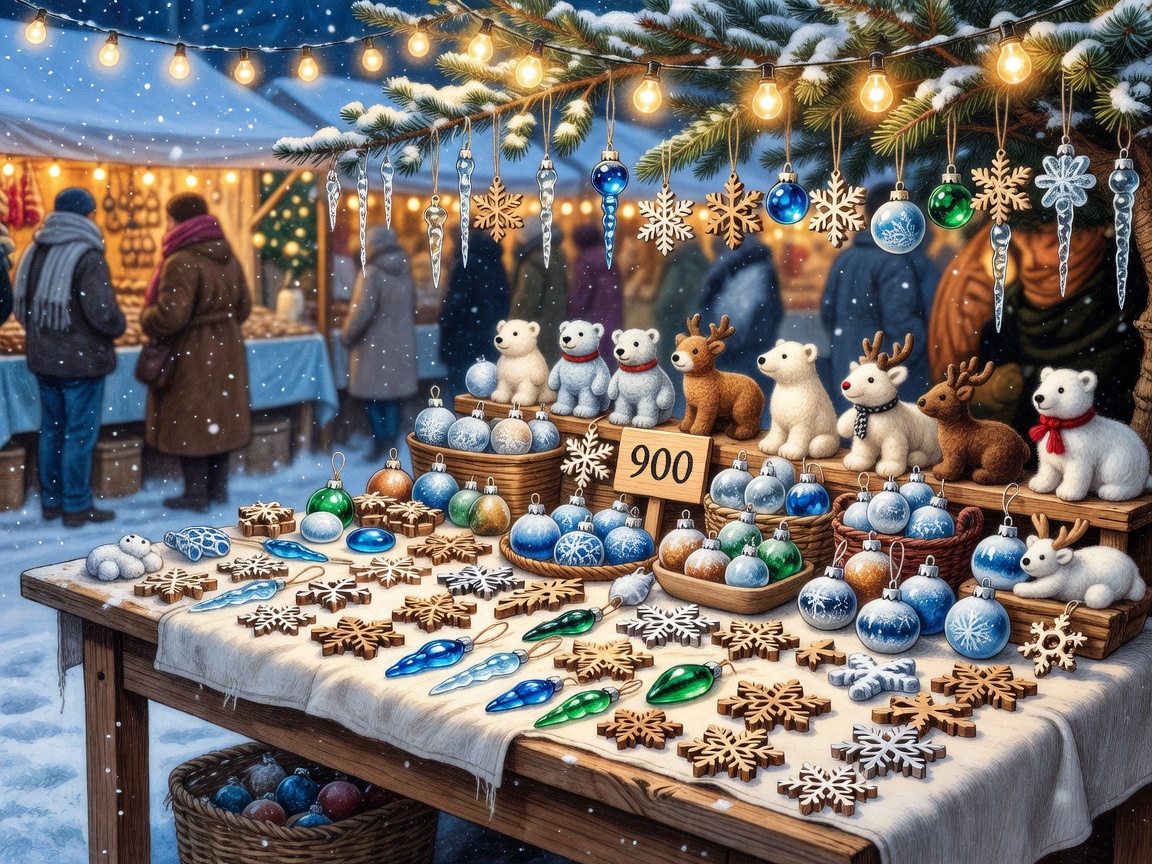
Wooden ornaments, carved figures, ceramics, glass decorations, woven textiles, paper stars, candles, and small household objects are all common ways makers and sellers bring seasonal ideas into a market. The range changes from city to city and from stall to stall. A beautiful display can include pieces made in a workshop, items assembled elsewhere, and mass-produced goods. The festive setting alone does not tell you how an object was made.
Wood has grain, weight, and a surface that responds to carving and finishing. Ceramics can be hand-built, wheel-thrown, moulded, or decorated by hand after production. Glass ornaments may be formed through different processes and vary in fragility. Textiles show their structure in the weave, seams, and finish. Paper decorations can be folded or cut by hand, printed in a small series, or produced at scale. Each method can create a useful object; what matters is clear information and an honest description.
Handmade, local, and sold locally are different claims
“Handmade” suggests meaningful making by hand, but the term is used in many ways and may not explain how much of a product was made manually. “Locally produced” refers to where production took place, not necessarily the maker’s method or materials. An item sold at a local seasonal market may have been made elsewhere and brought in by a retailer. None of these descriptions automatically establishes quality or authenticity, and not every product at a market is handmade or locally made.
If provenance matters to you, ask specific, neutral questions: Where was the item made? What part of the process was completed by hand? What material is used? Does the seller represent the maker, or are they a retailer? Can the object be repaired or cared for in a particular way? A clear answer is more informative than a vague decorative label. Some vendors may not know every detail, particularly when they sell on behalf of other makers.
Notice regional traditions without assuming uniformity
Some European regions are known for particular craft forms, including woodwork, glass, ceramics, textiles, and paper traditions. Yet a market’s selection can combine local makers with goods from a wider supply network. A city’s historical craft identity can provide context, but it cannot verify the origin of every item on a stall. Use museum collections, local cultural organisations, and maker information to learn more about a tradition outside the shopping moment.
Contemporary independent makers may reinterpret familiar shapes, use new materials, or combine digital design with hand finishing. Traditional and contemporary work can sit side by side. Instead of treating age or style as proof of value, look at construction, finish, function, and the seller’s explanation.
Choose gifts for real life
Consider where an object will be used, how it will travel, and whether its recipient will enjoy maintaining it. A glass ornament may be beautiful but needs protective packaging. A small ceramic dish can be practical if it fits in luggage and is safely wrapped. Textiles are often easier to pack, while candles and delicate paper pieces may need protection from pressure or heat. Ask for packaging suitable for a journey and check airline or customs guidance if a purchase raises travel restrictions.
For a meaningful gift, a modest object with a useful story can be better than a large souvenir chosen in a hurry. Read care instructions, ask whether materials are clearly identified, and consider whether replacement parts or repairs are possible. Avoid buying wildlife products or materials whose import rules are unclear. Where relevant, consult official customs guidance before travelling across borders.
Support small producers thoughtfully
Buying directly from a maker or an authorised representative can help you learn how work is produced, though market arrangements differ. Ask politely, allow space for busy vendors, and avoid treating a conversation as an authenticity test. If a maker shares a website or care card, keep it with the object. A receipt and written material description can also be helpful, especially for a more substantial purchase. Be cautious of claims that cannot be explained clearly, but remember that a small seller may have limited printed documentation.
Respectful photography matters too. Ask before photographing a person, a workshop process, or a stall display. Some makers welcome pictures; others prefer that product details remain private. A purchase is not permission to reproduce a maker’s design or image for commercial use.
A short gift-selection checklist
- Ask what the item is made from and where it was produced.
- Clarify which steps were handmade and who made the object.
- Check finish, durability, care instructions, and repair possibilities.
- Consider size, breakability, packaging, luggage, and customs rules.
- Request a receipt or material details when useful.
- Choose something the recipient can use, display, or care for comfortably.
Pair craft browsing with our guide to regional food traditions and market destinations. To suggest a topic, contact the Atlas.